The track, in numbers
These are his figures from his own account. They describe one song, not how AI music works in general.
Credit line, as he gave it: Words: human. Music and voice: AI.
Where it started: a name already in his head
“I wanted something rhythmic: something that would echo the primal, the wild, the ancient. And one name was already in my head: Artemis. The mission came first, of course. After ‘Not Enough Craters’ I was still living with it. But behind the mission stands the goddess, so I went back and reread the myths.”
He points out a small thing lost in translation: in Ukrainian, Diva means both “the maiden” and the constellation Virgo, so the title is a hunt under the stars from its first word. The song itself is about a goddess who goes out to hunt while the prey keeps coming back of its own free will, knowing how it ends: attraction you cannot escape, and choosing it anyway.
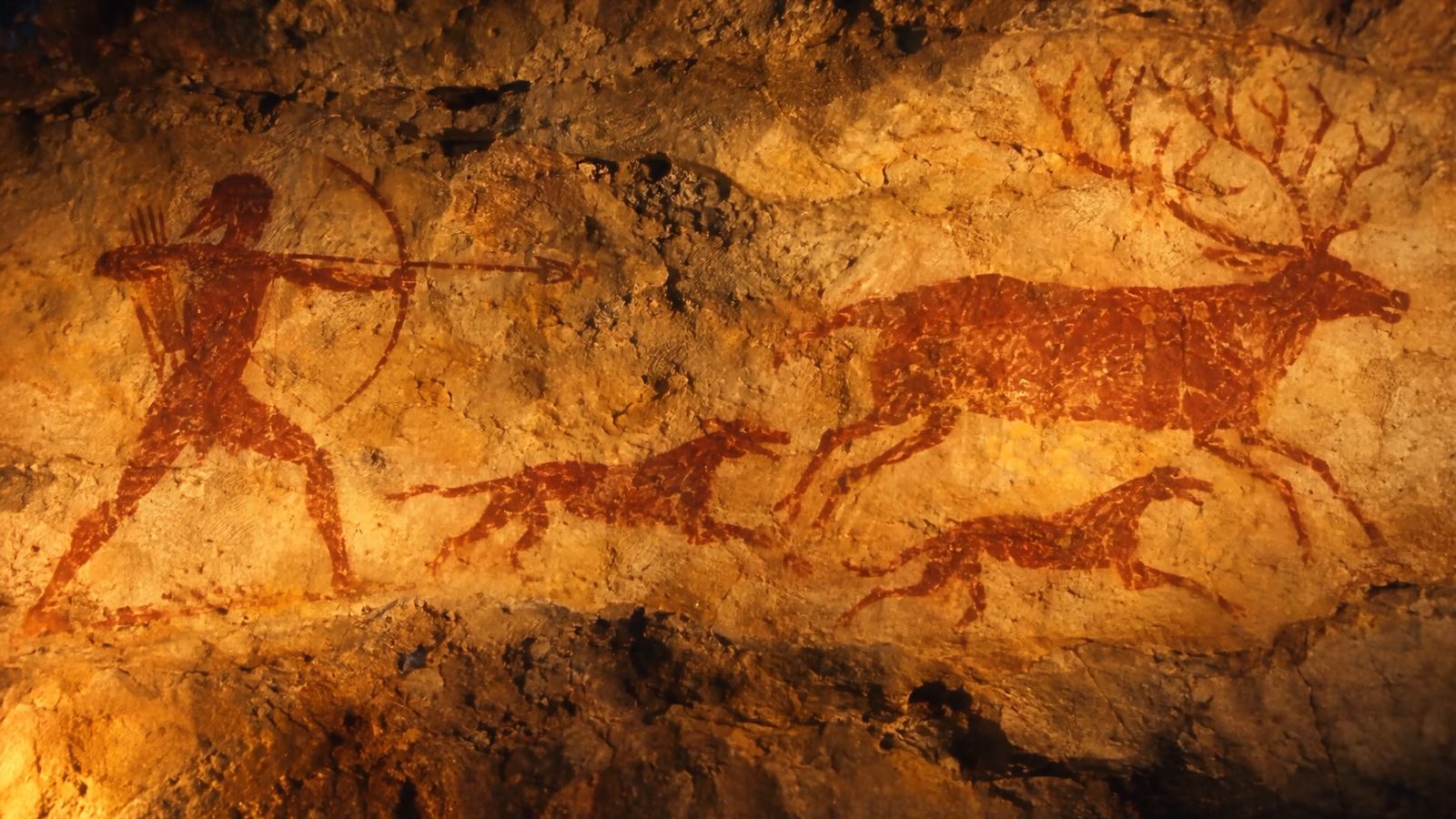
The myths give it two faces, as he tells them. One is Orion, the great hunter who walked beside Artemis and fell by her hand. The other is Actaeon, who saw the goddess bathing and was turned into a stag and torn apart by his own hounds, so that the hunter becomes the prey. The lyrics leave room for both. The video chooses Orion. The lyrics did not come fast: he put them aside more than once before they took the shape of a song. For the mission this grew out of, see “Not Enough Craters”, the first making-of in this series.
The version ledger: 24 versions, one kept
He counted every Suno output. Round one used his first style prompt: one original generation and ten covers. Round two used a harder second prompt: a new generation and four remixes. Round three went back to the first prompt with a single change and produced eight more covers.
Our drawingVersions numbered in the order of his rounds. He describes the keeper as the fifth of the eight covers in round three, “cover number fifteen overall”, which places it at version 21 of 24; he confirmed that count when he read our draft. The highlighted cell is that version.
What changed, prompt by prompt
This is his own diff, printed with his permission.
| What | Prompt 1 | Prompt 2 | Prompt 3 (final) |
|---|---|---|---|
| Genre | Ritual POP, club groove | Ritual DANCE, heavy, “a club that turns into a temple” | Back to ritual pop |
| Intro | Generic 5-8 s instrumental | 6 s ritual drums | 6 s sacrificial ritual drums, frame drums and low toms, no synths |
| Voice | Baritone, sustained sung notes | “Low and controlled”, no sustained notes | Baritone and sustained notes back |
| Phrasing | Slow, deliberate, no crowded syllables | Dropped | Back |
| “Di-di-di” | Sung on the beat | Spat out, percussive | Sung on the beat |
| Pauses and drops | None | Real silences and a hard beat drop before every “Artemis went out to hunt” | None |
| Bridge | Pads and reverb, whispered but sung | Sparse and cold | Ritual drums far away in reverb, plus pads |
| Safety anchors | “NO spoken word” present | Missing | Back |
“When I took out ‘sustained notes’, ‘slow phrasing’ and ‘NO spoken word’ to make it harder, Suno started talking instead of singing. The final version is prompt 1 with the drums from prompt 2.”
He describes the second prompt as getting heavier but losing the anchors that kept the voice singing. So he went back to the first prompt and took only one thing from the second attempt, the ritual drums. Six seconds of sacrificial drums open the track, and they echo far away in the bridge when everything else falls silent.
The three prompts, word for word
Printed verbatim with his permission, including the Ukrainian syllables and the one Ukrainian line in prompt 2, except that dashes in his text are shown as colons. Suno v5.5, Premier plan. He notes that anyone reproducing them on v6 may get a slightly different result.
Prompt 1 (starting point)
Prompt 2 (harder, and the one that made Suno talk)
Prompt 3 (final)
The video: 56 scenes and a master sheet per character
He first tried to leave his usual road. The video needed mannequins, so he generated models in Tripo and started building the scene in Blender. Even at the draft stage they looked flat and lifeless, so he went back to InVideo, where all his videos have been made.
“The hardest decision was one I had avoided in most of my earlier videos: this time the main characters show their faces. The song demanded it: it’s about dancing, about looks exchanged, about bodies that know what’s coming before the mind admits it. A faceless hunter and a faceless goddess couldn’t carry that.”
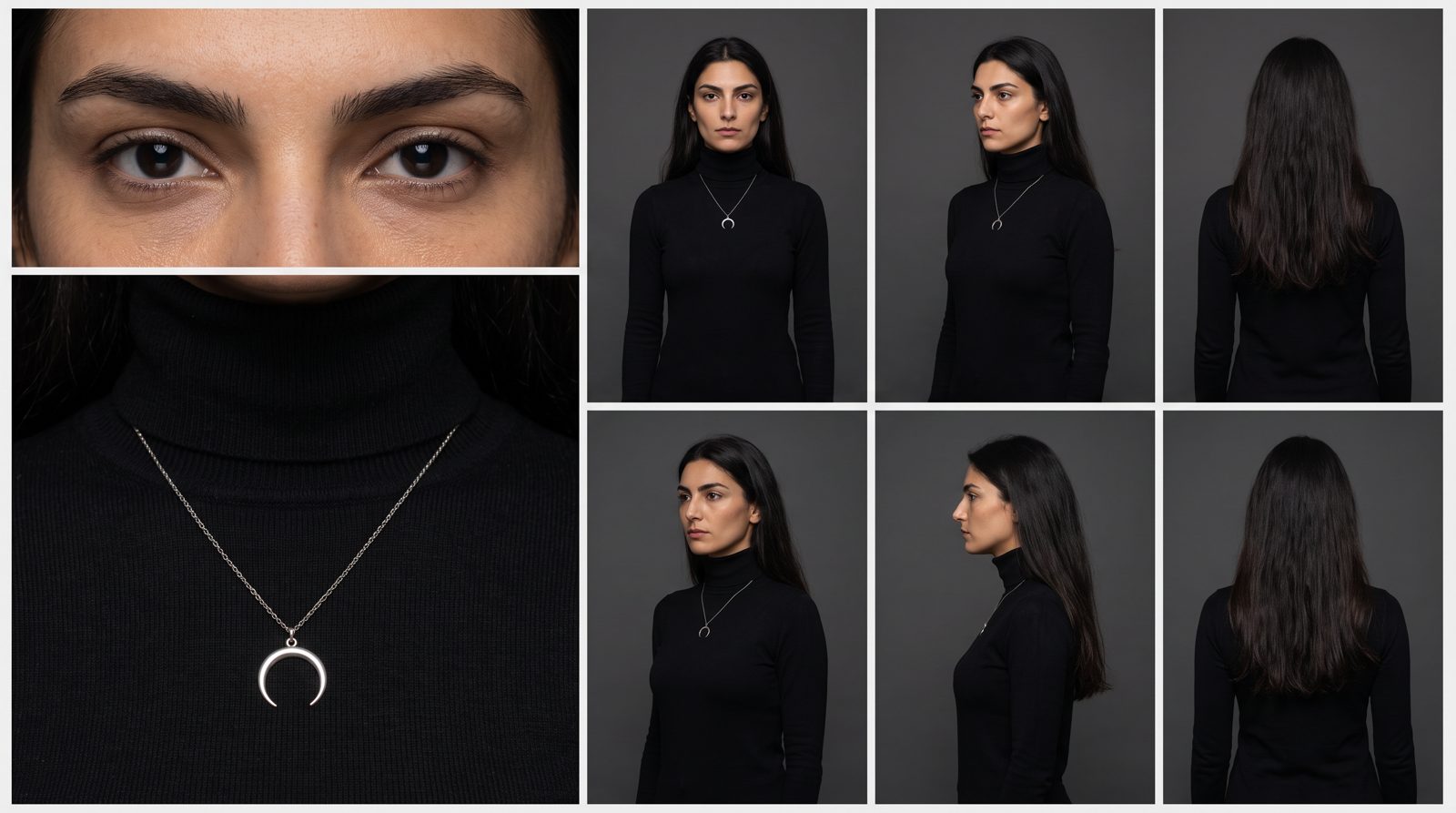
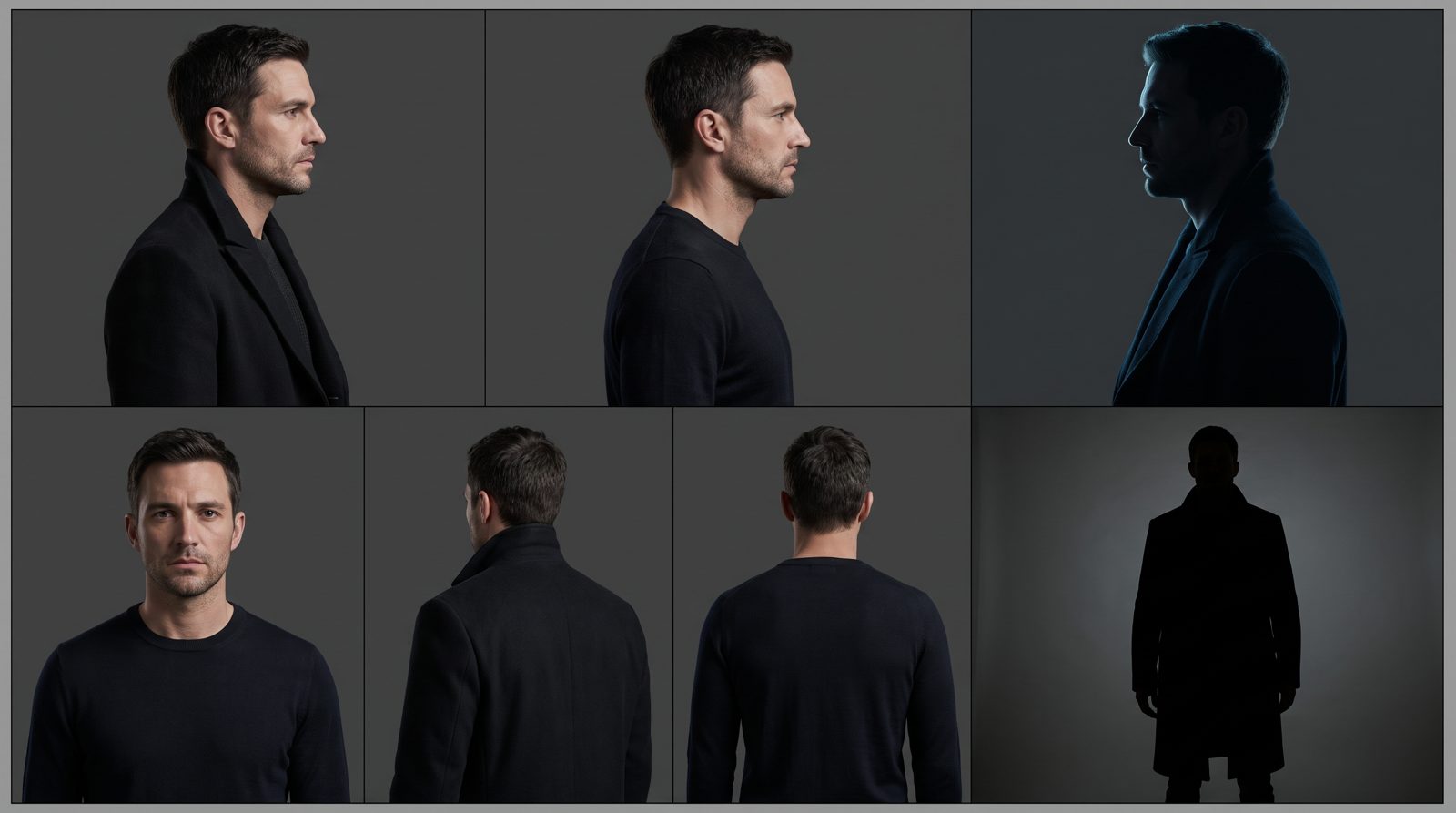
How the faces held: before a single scene was generated, each character got a master sheet in Nano Banana Pro, one image with a face close-up, front, back and both profiles. Every scene was then generated in Seedance 2.5 with those sheets as references. Artemis wears a small crescent moon on a chain from her first sheet. From first brief to finished video took several days with breaks, and the final assembly of the whole song took about five and a half minutes, one pass with no manual fixes.
The idea: a planetarium
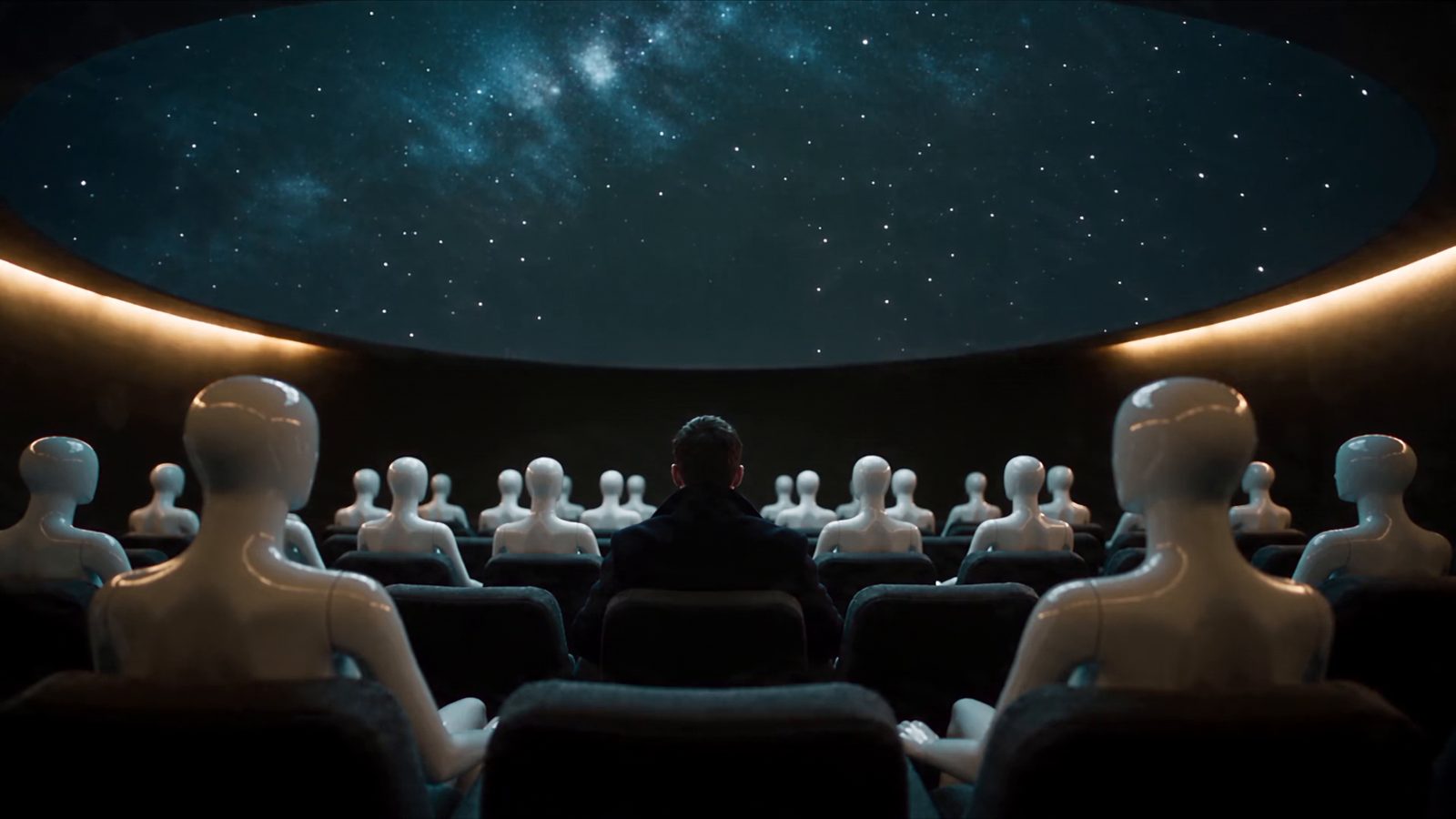
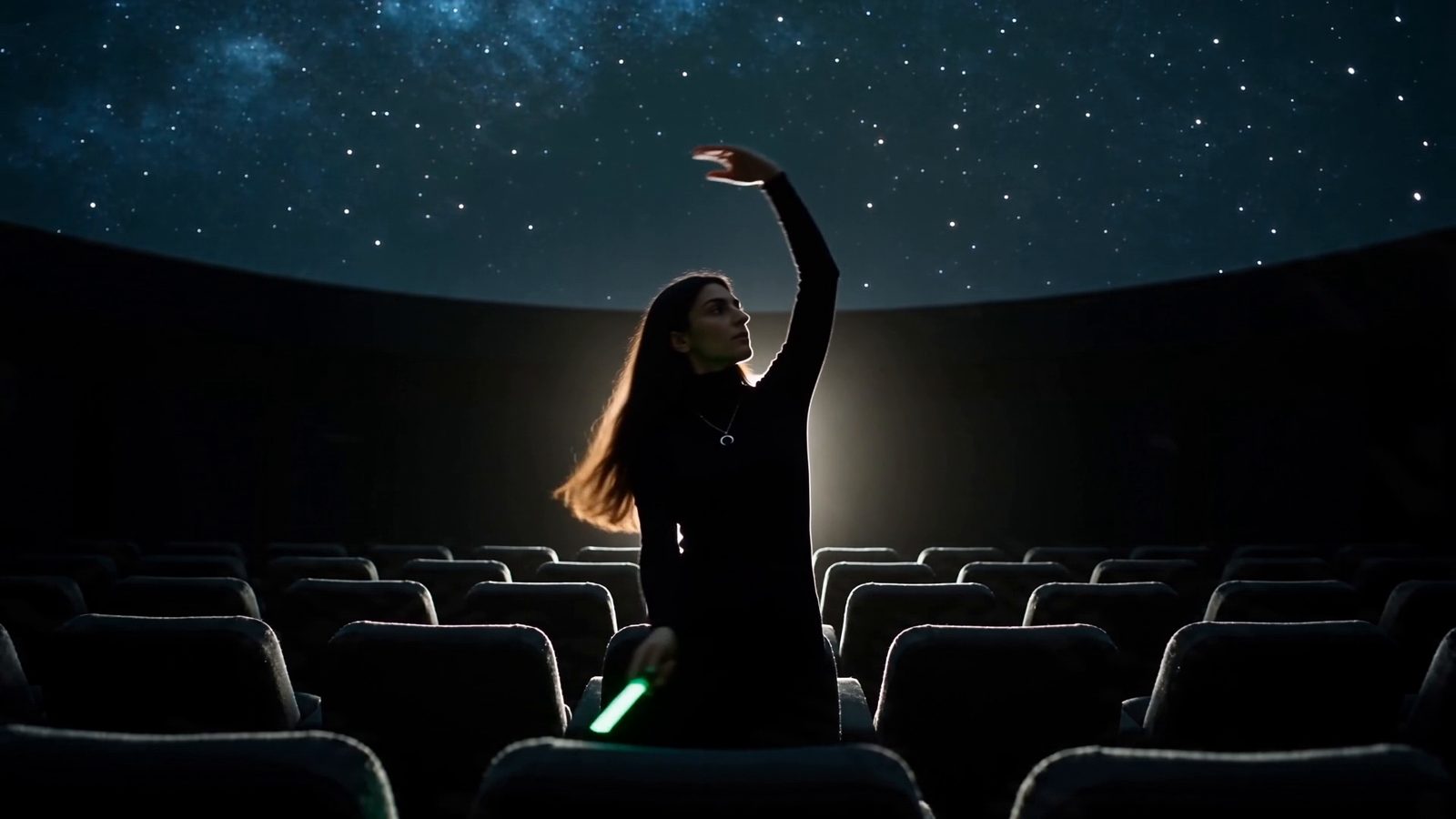
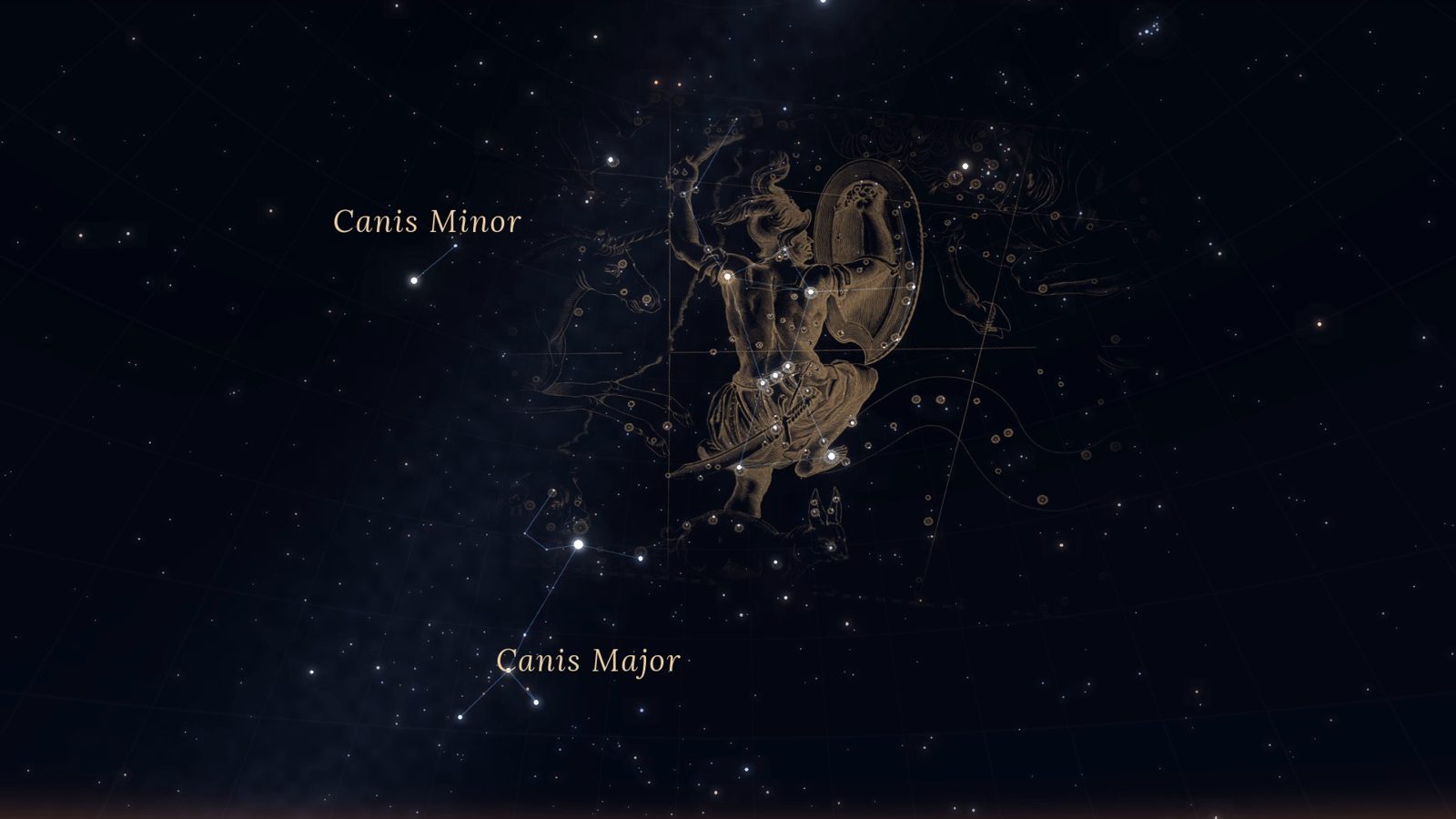
A man sits under the dome, a hunter himself. But the show is not about his hunt. It is about hers: Artemis runs the planetarium, and her laser pointer works as her arrows, firing in short bursts like shots, so that wherever the beam lands, the hunt begins. Around him sit mannequins, her earlier prey, frozen in place as an audience watching her hunt again. The constellations overhead are drawn and labelled like a real star show, all but one figure. At the end he does not freeze like the others: he rises into the sky and becomes that figure, Orion, with his dogs Canis Major and Canis Minor beside him, so the hunt goes on forever. She is in that sky too, as the Moon. He adds that when NASA chose a name for the programme that would take people back there, it chose Apollo’s twin sister, and that is where the song meets the mission it started from. Actaeon stays only in the lyrics: his hero never grows antlers.
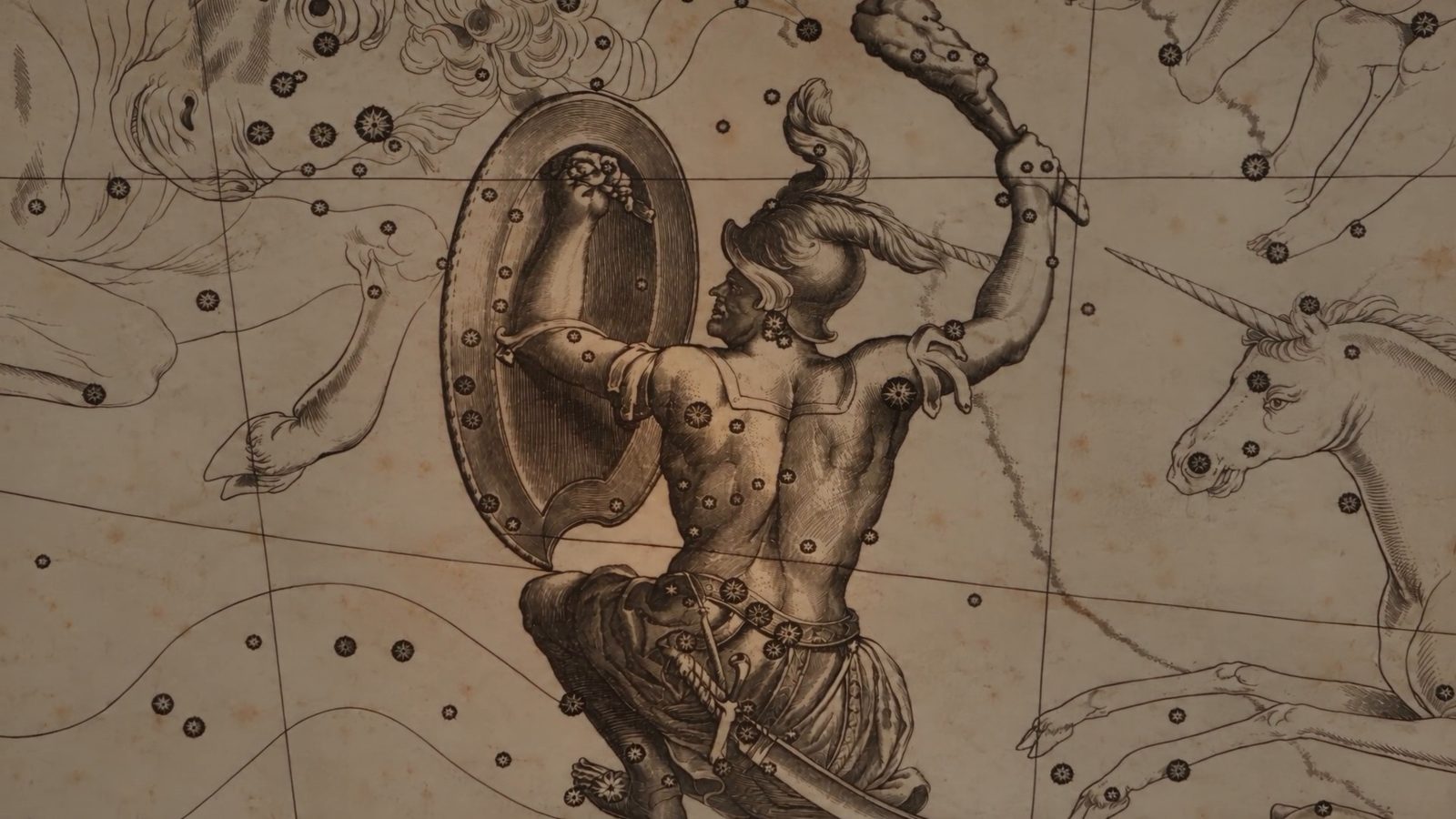
He also describes the sky in the video as the real one, built from a star catalogue, with a 1690 engraving of Orion by Hevelius laid over it. The engraving is the Orion plate from Johannes Hevelius's star atlas Uranographia (Danzig, 1690); we checked it against a public copy of the plate. The sky behind it is his description: the real one, built from a star catalogue. He adds that Hevelius drew the constellations mirrored, as seen from outside the celestial globe, so in the video the engraving is flipped and tilted to sit on the real stars, which is why his Orion faces the other way from the plate.
What went in the bin
He kept a reject count for the video as well, and agreed to print it.
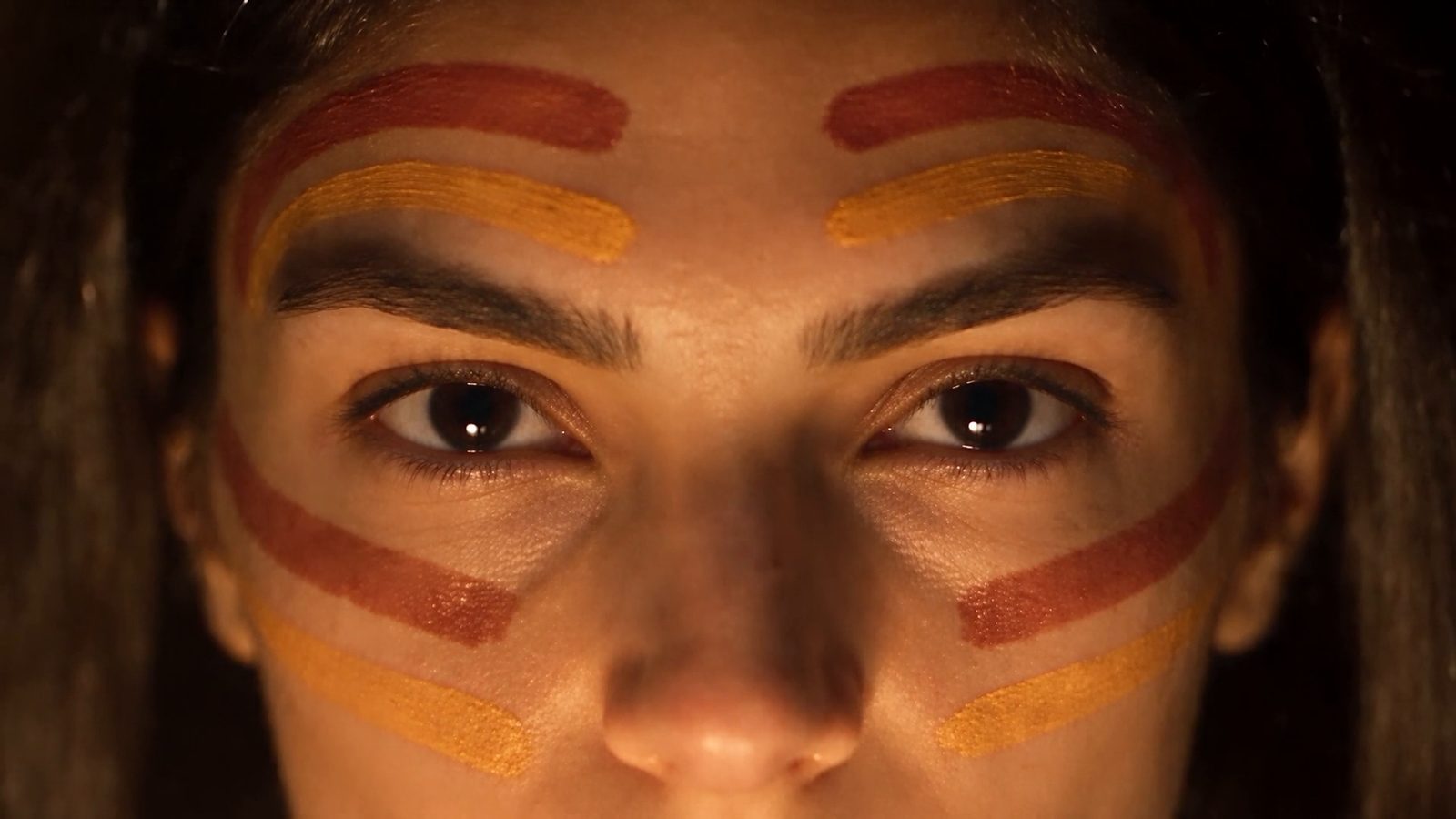
- Five video takes binned: the Hevelius engraving of Orion came out with the original lettering still on it; a close-up of eyes in ochre came out as a wide shot; and the first three mannequin shots failed, because all the mannequins were female and identical and in the scene where they turn their heads, nothing moved.
- One image rejected: the first Artemis master sheet came out with template text and rulers on it.
- Two more takes were fine but did not make the cut.
“In the first batch that was roughly one reject per four scenes, almost all on the hard shots: text on an engraving and a crowd of mannequins. After that lesson, the later batches went one take per scene, with no regenerations.”
The one edit retention data asked for
The video does not start from the first second of the song. It came out of InVideo at 4:10, and in CapCut he trimmed it to 3:56, cutting the opening where only the drums and a quiet build play.
“Retention data on my earlier videos showed that quiet first seconds lose viewers, so the video starts right where ‘Nich’ (‘Night’) comes in: the first word lands in the first second. On streaming platforms the song stays complete, drums and all.”
His earlier retention figures are on the previous page in this series: “Not Enough Craters”.
What to take from it, and what not to
This is one song, one tool version and one maker, so everything below is a lead to test, not a rule.
Keep the anchor phrases when you push harder
In his run, the three phrases he removed were the ones holding the voice in song. If a prompt makes Suno speak, check what you deleted before adding more instructions.
Borrow one thing from a failed attempt, not the whole attempt
The keeper came from the first prompt plus a single idea from the second. Changing one thing per round also made the diff readable afterwards.
Keep a ledger
The 24-version count and the reject count exist because he wrote them down while working. They are why this page can show a method and not only a result.
Entry two of a dated series
This is the second making-of in a standing series from Mr. GetMen: one entry per release, in this format, with the prompts, the diff and the reject counts. The first was “Not Enough Craters”. He has announced the next song, “Zaraz”, for 28 November 2026, and we will add it as entry three when it is out.
Listen
Frequently asked questions
Why did Suno start talking instead of singing?
In his account, the second prompt removed the phrases that kept Suno singing: sustained notes, slow phrasing and the line NO spoken word. The result got heavier, but the voice began slipping into speech. Putting the three anchors back fixed it. One song and one tool version (Suno v5.5), so a lead and not a rule.
How many Suno versions did Polyuvannia Divy take?
Twenty-four: one original generation and ten covers on prompt 1, one new generation and four remixes on prompt 2, and eight more covers on prompt 3. The final track is the fifth cover of round three, which he counts as cover fifteen overall.
Which Suno version and plan did he use?
Suno v5.5 on the Premier plan. The final take was generated on 27 August 2026, before Suno v6 came out, so reproducing the prompts on v6 may give a slightly different result.
How did he keep the characters' faces consistent in the video?
Before any scene was generated, each of the two characters got a master sheet in Nano Banana Pro: one image with a face close-up, front, back and both profiles. Every scene was then generated in Seedance 2.5 with those sheets as references.
Why does the YouTube video start later than the song?
The clip came out of InVideo at 4:10 and he trimmed it to 3:56 in CapCut, cutting the quiet drum opening, because retention data on his earlier videos showed that quiet first seconds lose viewers. Streaming platforms carry the complete song.
Was the song labelled as AI-made?
Yes. His credit line is: Words: human. Music and voice: AI.
Sources
- Mr. GetMen, written correspondence with Rinzara, November 2026, including his making-of notes of 10 November 2026, his answers of 11 November, the stills and master sheets of 12 November and the release links of 20 November. Every quote and figure attributed to him on this page comes from that correspondence.
- “Polyuvannia Divy” on YouTube and on Spotify, the released work.
- Suno, the generator used for the music and vocals.
This article is an interview and educational information, not legal advice. Platform policies on AI-made music are changing quickly; confirm current rules with each platform before relying on them. Published November 2026.